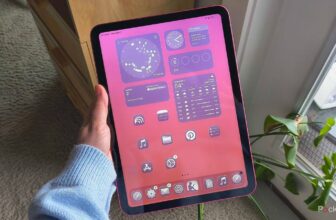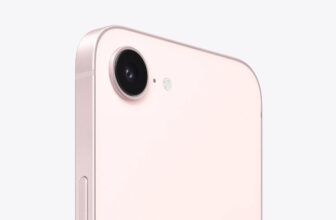
For me and a lot of other owners, there are a lot of long-standing gripes about smartphones that aren’t being addressed with the priority we think they deserve. Some people are upset that the industry has effectively abandoned small smartphones that can be used one-handed. One of my own complaints is that phone makers continue to prioritize ultra-wide cameras over telephotos in some cases, even though filling the frame with your subject(s) is one of the primary rules of photography.
If there’s something everyone can agree on, though, it’s that phone makers have been sidelining battery life, at least in the models you can buy here in North America — more on that in a minute. Yes, an iPhone 17 Pro can potentially last you more than a day if you’re careful, but people have been asking for practical multi-day battery life for decades at this point. There aren’t any signs that two- or three-day batteries are about to become the norm in 2026, unfortunately — and here’s why.
Phone makers are prioritizing AI
The flagship feature no one asked for
Okay, it’s an exaggeration to claim no phone users are asking for generative AI — my wife has even made some surprisingly tasty meals using suggested recipes. But realistically, the tech still makes plenty of mistakes, and forms the basis for features that aren’t particularly useful, such as photo-editing tools that let you fake portraits. I do find it useful sometimes, even in researching articles — but it’s telling that I can only use it as a starting point, rather than a reliable source of info.
While the datacenters for AI are infamously expensive, those are needed one way or another, and it’s cheaper to focus on software as an upgrade rather than spend on new phone components.
So why is AI such a priority, then? I’m sure the main reason is that when it does work, it feels like magic, and no company wants to be left behind. Apple Intelligence has been slammed for lacking promised features that have long baked into Google Gemini, to the point that Apple has caved and agreed to pay for integrating Gemini models into its own software. The fruits of that should be revealed at WWDC 2026 in June.
There’s likely another factor, though: saving on production costs. While the datacenters for AI are infamously expensive, those are needed one way or another, and it’s cheaper to focus on software as an “upgrade” rather than spend on new phone components. Witness Samsung’s recent unveiling of the Galaxy S26 lineup — the company spent a lot of the event hyping up AI improvements, while barely advancing most of its hardware specs over the S25. A substantial battery upgrade would require serious redesign efforts, as well as spinning up research, supply, and manufacturing costs — all for something that could easily increase pricetags for the end user, at least in combination with those datacenter build-outs.
Major brands aren’t investing in silicon-carbon batteries yet
Legitimate fear or cheapskating, you decide

If you’re not familiar, silicon-carbon (Si-C) batteries are a variation on lithium-ion technology that results in substantially higher energy density. This allows companies to put the same amount of power into a smaller package, or dramatically increase runtime using the same dimensions. Si-C is increasingly de facto for Chinese phones. One recent example is the OnePlus 15, which has a whopping 7,300mAh capacity, enough to last two full days even with heavy use.
Oddly, Apple, Google, and Samsung have avoided putting Si-C in any of their phones yet, despite the tech having been out in the wild for a few years at this point. Even the iPhone 17 Pro Max is saddled with a conventional 5,088mAh battery pack.
The transition is expected to happen sooner or later — but it could be that companies are waiting for refinements and more data before taking the plunge.
The obvious explanation for this is risk aversion. When charging, Si-C batteries swell up far more than regular lithium-ion packs. This needs to be accommodated for in design, as do potential issues of rapid degradation or thermal runaway. So far, I haven’t heard any complaints about Chinese phones with Si-C, but all it would take is a few iPhones or Galaxy devices suffering from these issues to land Apple and Samsung in hot water. The transition is expected to happen sooner or later — but it could be that companies are waiting for refinements and more data before taking the plunge. Samsung actually confessed to the data part during its Galaxy S26 press briefing, it’s just that we haven’t heard anything from Apple or Google.
Once again, production costs enter the picture. Si-C batteries aren’t as cheap as standard ones, and with AI and US tariffs impacting profit margins, there’s probably no rush to bring something to market when waiting a while could be both safer and cheaper.
Many Western shoppers are complacent about battery specs
No pressure, no change

What makes the Chinese market so special is not just its enormous, self-contained market, but the predominance of Android. Customers can and do jump between brands on a whim, so it’s essential for businesses to constantly one-up each other with superior specs or completely new features. The first foldable and tri-fold phones were sold by Chinese companies, not Samsung.
In the US and Canada, meanwhile, there are only four major brands: Apple, Google, Samsung, and Motorola, with Apple reigning supreme by a mile. There’s less competition, and the people in the Apple ecosystem — myself included — are unlikely to switch, since they’d lose access to features and services that don’t have an equivalent in the Android world. Brands like Nothing and OnePlus have marketshares below a fraction of a percent.
Without much competition to nudge battery specs higher, North American shoppers have come to take it for granted that few smartphones will last more than a day on a charge.
All this translates into less incentive to push boundaries, not just in batteries, but in other areas as well, such as photography. China’s Xiaomi 15 Ultra sports two telephoto cameras, including a 200-megapixel shooter. Meanwhile, the iPhone 17 Pro is Apple’s first device with a 48-megapixel telephoto, up from a meager 12 megapixels.
Without much competition to nudge battery specs higher, North American shoppers have come to take it for granted that few smartphones will last more than a day on a charge. Recently, Apple and Samsung seemingly took a step backwards, releasing the iPhone Air and S25 Edge — phones that sacrificed capacity for ultra-thin designs. While you can still make it through a full day with either, it’s not uncommon for Air users, at least, to have to charge twice on heavier use days. Good luck trying to make it through a day of snapping photos and video on that tour of Paris.
The good news is that the backlash to ultra-thins is real. Sales of both the Air and Edge have been weak, and reports suggest that there won’t be any sequels in 2026, if ever. Nevertheless, it might still be a while before Apple and Samsung take the hint, since their standard models are selling as well as ever.
Trending Products

ASUS RT-AX1800S Twin Band WiFi 6 Ex...

TP-Link AX5400 WiFi 6 Router (Arche...
MSI MPG GUNGNIR 110R – Premiu...
Lenovo 15.6″ FHD Laptop, Inte...
GAMDIAS ATX Mid Tower Gaming Laptop...
15.6” Laptop computer 12GB DD...

SAMSUNG 27″ T35F Sequence FHD...
cimetech EasyTyping KF10 Wi-fi Keyb...